
Sashiko 101: Sewing Safely
Jul 15, 2026
Learning Sashiko is a lot of fun, and it's so easy to be swept up in the excitement of it with all of the beautiful resources that exist. When there are so many fun fabrics, threads, and patterns out there to start playing with, it can be easy to jump past the basics in our eagerness to get going. That's why today, we're talking about some simple safety precautions to consider when you start stitching Sashiko, from managing all those sharp ends to keeping your hands and eyes safe from injury.
Please note: in this post, there are links to some tools you can purchase to make stitching a little easier. These links are affiliate links, which means if you purchase from them, I'll make a small commission at no extra cost to you. I would never recommend something I didn't think would be genuinely useful!
Sharps
Handling pins and needles is an unavoidable part of sewing; if we want something to be able to pierce fabric, it needs to be at least a little sharp. This is especially true of Sashiko needles, who need a bit of an extra point to help stitch through multiple layers with a relatively thick thread. Luckily, with a few guidelines, we can avoid getting a nasty prick!
- Sit comfortably. Few things are more distracting than discomfort, and you don't want to be distracted when you're working with pointy things.
- Use good lighting. Being able to see really does make a difference.
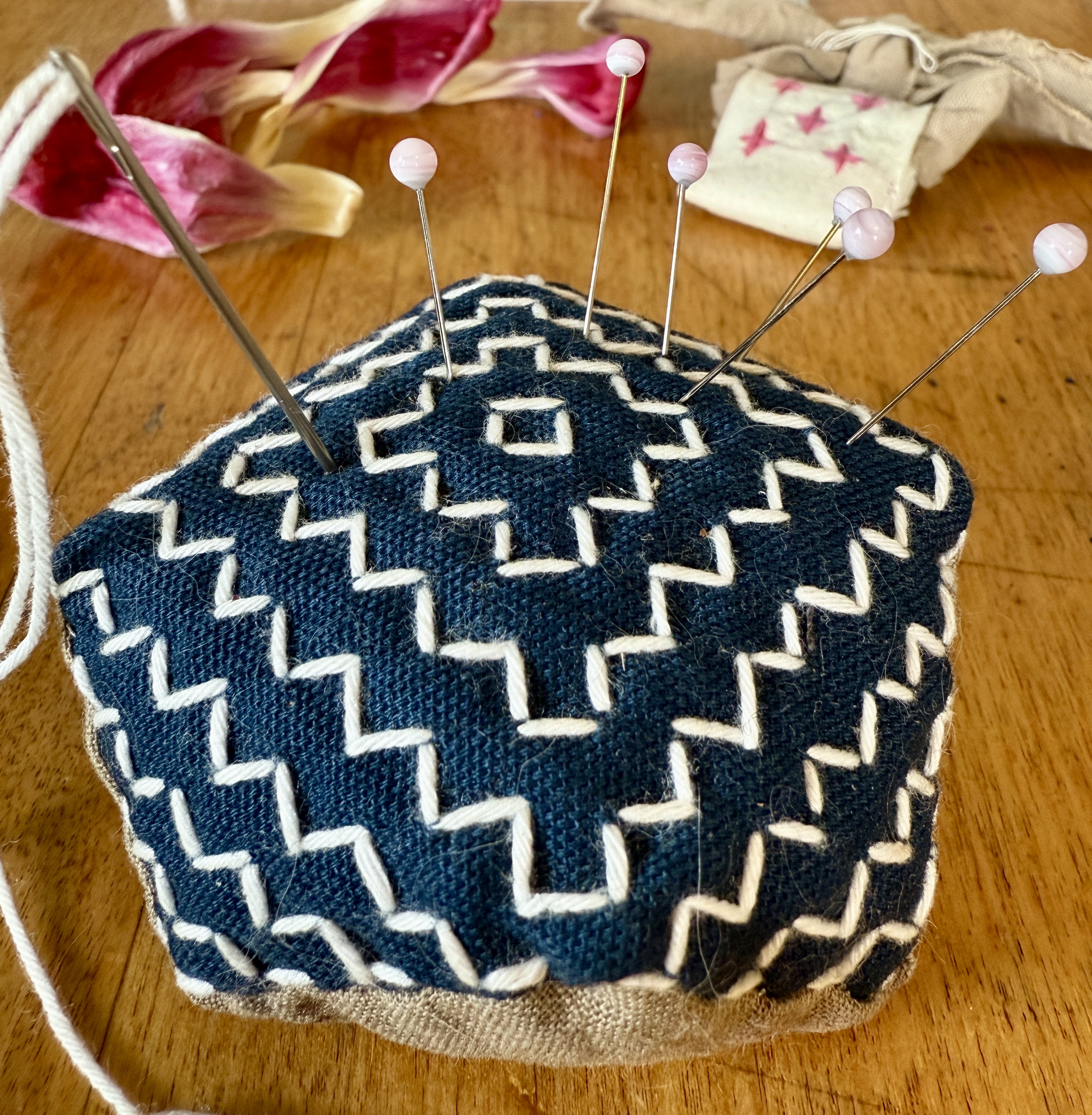
- Keep a pincushion handy! Setting that pin or needle down on a table "just for a second" has rarely led to me being able to find that pin or needle again quickly. They roll, they fall, I move a scrap of fabric over them, they become invisible... It's better to have them all in one place, with that pointy end tucked away.
- Don't put pins or needles in your mouth.
- It helps to have a magnet handy. They work great as needleminders, but they are also super helpful when you (okay, I) inevitably drop a needle and you can't see it.
And of course, it always helps to limit your distractions (like the phone or television) and really focus in on what you are doing!
Hands
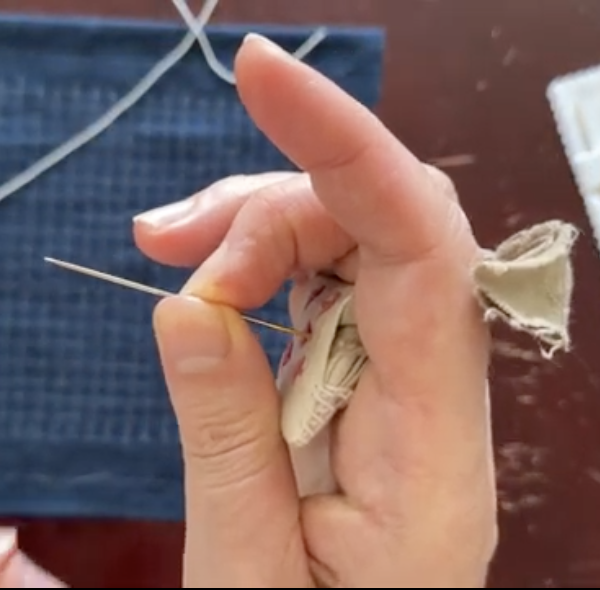
While we naturally have to watch out for the pointy end of the needle, the way that we rest our Sashiko needles on our palms means that we also need a bit of protection from the eye end of the needle. For this, I use a palm thimble - you can find them in metal or leather, or you can make your own (I've made them from denim or canvas and a coin). I recommend trying a couple of options and seeing what feels best for you!
Thimbles
Because with Sashiko, we are often working through multiple layers and using a fairly thick thread, it can sometimes be challenging to work the needle through the fabric. For this, it can be helpful to use silicone or rubber fingertip thimbles (like these or these) or thimble tape to help you grip the needle and pull it through with less strain. You can also get special tools, adhesive discs for your fingers, or rubber pads to help you pull needles through fabric.
We also need to be conscious of giving our hands a break and stretching them regularly. I like to begin and end each stitching session with some hand stretches, and I try to take a break every twenty minutes or so just to shake out my joints a little. I think of it as an exercise in mindfulness, to be aware of how my hands are feeling. If anything starts to cramp or hurt, it's time to rest. If you don't know where to start with stretches, you can find my favourites here!
Eyes
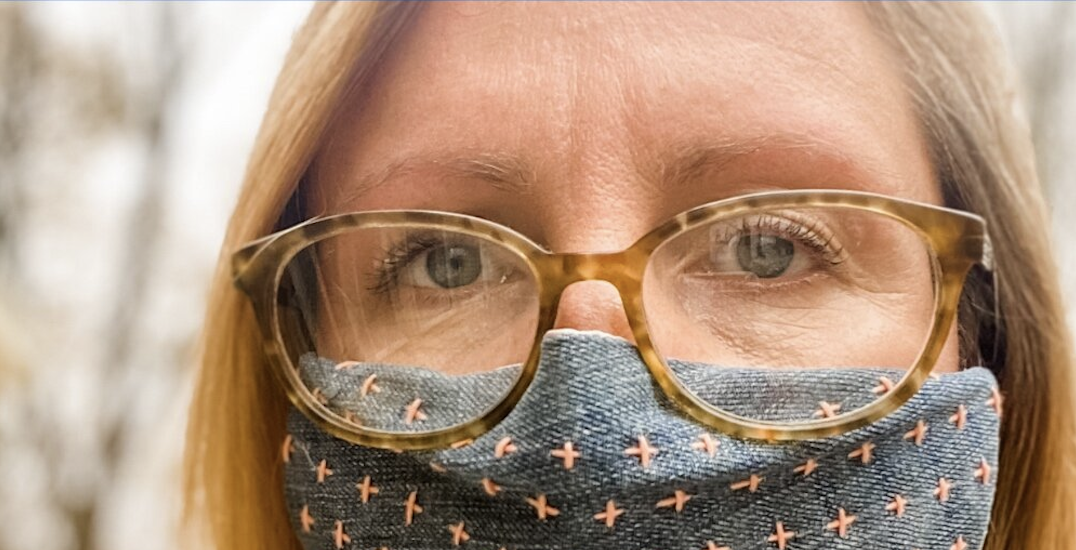
A part of stitching safety that often gets overlooked is our eyes, but they are awfully helpful in our stitching practice, so it's a good idea to give them some love. One good place to start is by making sure you are wearing your glasses if you have them. The 20-20-20 rule is a great one, too: every twenty minutes, look at something about twenty feet away for twenty seconds.
Again, it's helpful to tune into your mindfulness here during your stitching session. Some questions to ask yourself include:
- Do my eyes feel tired or strained?
- Has the lighting changed since I started my session?
- Do the materials have enough contrast that I can see everything without straining?
To wrap up my sessions, I do my favourite eye resting activity - I rub my hands together until the palms are warm, take off my glasses, and place my warm palms (gently) over my closed eyes. It's such a soothing practice.
Posture
The last area I want to touch on for building good habits and stitching safely is our posture. It's easy to find ourselves hunched over our work at the end of a session, but this isn't great for our bodies and can put additional strain on our muscles and spine. We want to avoid slouching, and even more importantly, we want to make sure we are taking breaks and changing up our posture now and then, as holding your muscles in one place for extended periods of time can lead to injury. I try to lean into the mindfulness aspect here as well, and make sure I am taking proper breaths and sitting in a comfortable way.
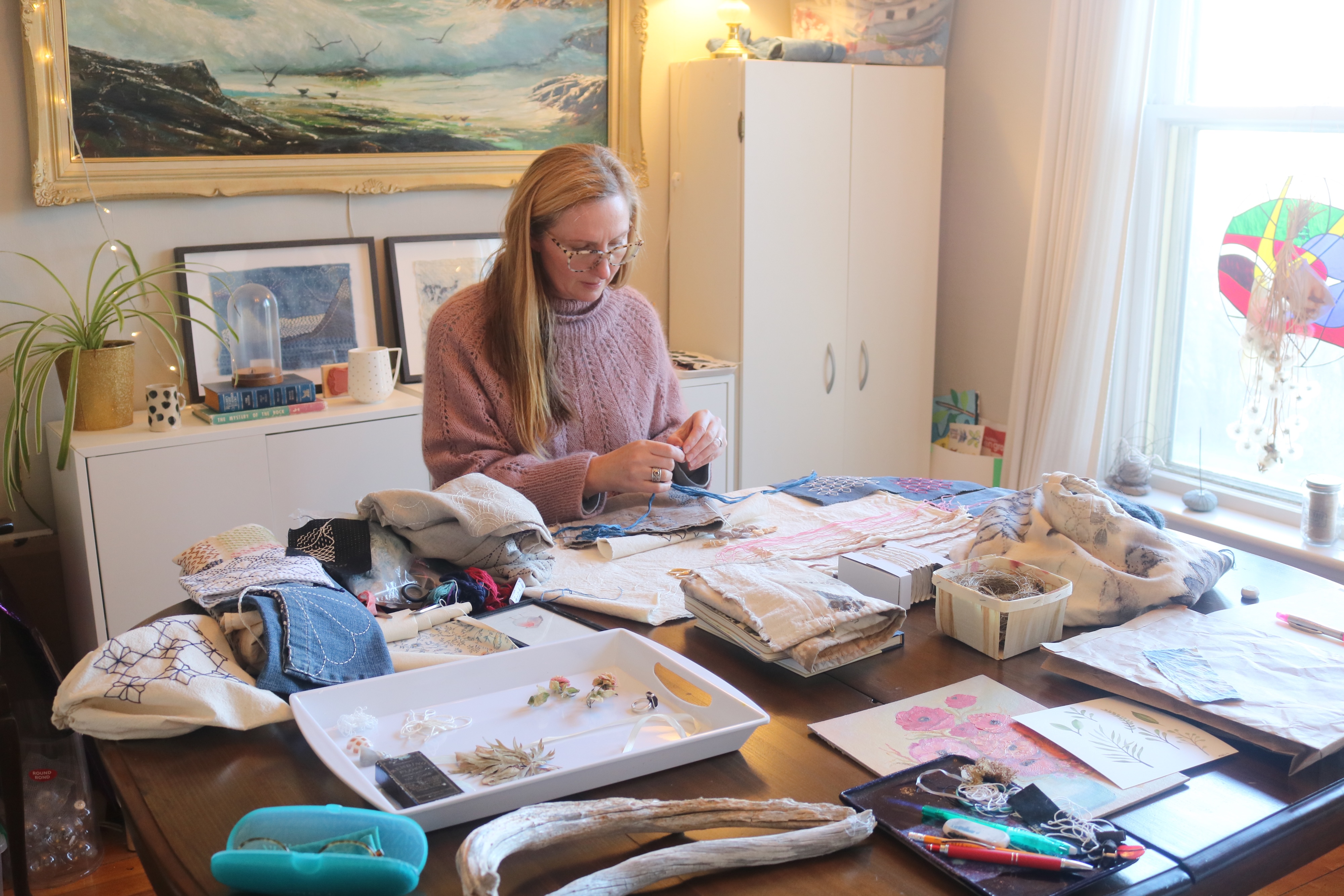
As well as being relaxing ways to embrace mindfulness, these tips can help keep us creating without having to take long breaks to heal. As much fun as it is to dive right in and start stitching, it's much safer to embrace the "slow" in "slow stitching" and pay close attention, especially as you are starting out and building habits. That way, you'll be able to keep creating to your heart's content for a good, long time!
With these tips in mind, you're ready to take the next step into your stitching practice! Get started with my free Sashiko Essentials: From First Stitch to Mastery guide here.

